

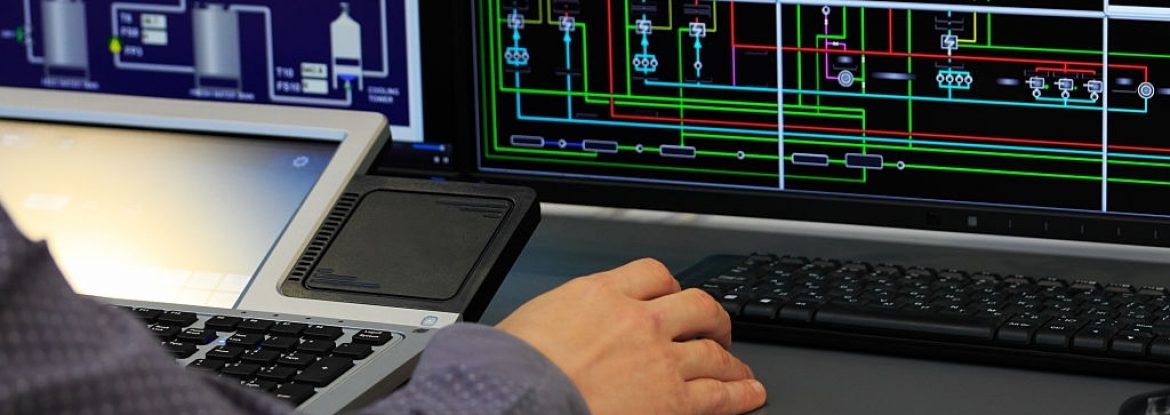
An example of a SCADA application
A typical SCADA system can be set up to monitor a critical pipeline leak, and once a leak is detected, it can execute a series of commands using machines to either alert a signal of the leak and/or immediately close the valve to minimize or eliminate hazardous conditions, revenue, or production loss. Each SCADA system may be customised to match a specific application; it can be as basic as a small office building (low budget) or as complicated as a nuclear power plant (high budget).
Why are SCADA systems important?
SCADA systems are important because they automate processes. It enables a company to meticulously research and predict the best answer to a given set of circumstances, and then execute those actions automatically every time. Human error is practically eliminated when equipment and processes are monitored using accurate machine control. More significantly, it automates typical, monotonous, everyday operations that were previously handled by humans, increasing productivity, improving real-time management of crucial system failure, and reducing the risk of avoidable environmental disasters.
SCADA systems are also required to monitor and control a broad geographical area for which a company may not have sufficient staff. As a result, the profitability of these locations or places is dependent on dependable connectivity and operability.
What are SCADA systems key components?
The bulk of local and remote process alarms, monitoring, and control is performed by SCADA systems, which use Distribution Control Systems (DCS), Process Control Systems (PCS), Programmable Logic Controllers (PLC), and Remote Terminal Units (RTU). In the sectors listed above, the PLC or RTU is the main workhorse. Monitoring liquid level and gas meter readings, equipment voltage and current, operational pressure and temperature, and other equipment condition are the key requirements of these devices.
SCADA Systems are widely used in the following:
- Oil and Gas
- Pipeline monitoring and control
- Remote equipment and asset monitoring and control of production, pumping, and storage locations
- Offshore platforms and onshore wells
- Refineries, petro-chemical stations
- Plant/factory automation
- Water and Wastewater
- Water treatment centers and distribution
- Wastewater collection and treatment facilities
- Utilities
- Electrical power distribution from gas-fired, coal, nuclear
- Electrical power transmission and distribution
- Agriculture / Irrigation
- Manufacturing
- Food and Beverage
- Pharmaceutical
- Telecommunications
- Transportation
- And many others
SCADA systems nowadays can do more than just gather data and control devices. They examine data and make judgments without the assistance of humans using artificial intelligence (AI). They can work in a cloud environment, allowing SCADA monitoring and control to be done from anywhere utilizing tablets and smartphones.