

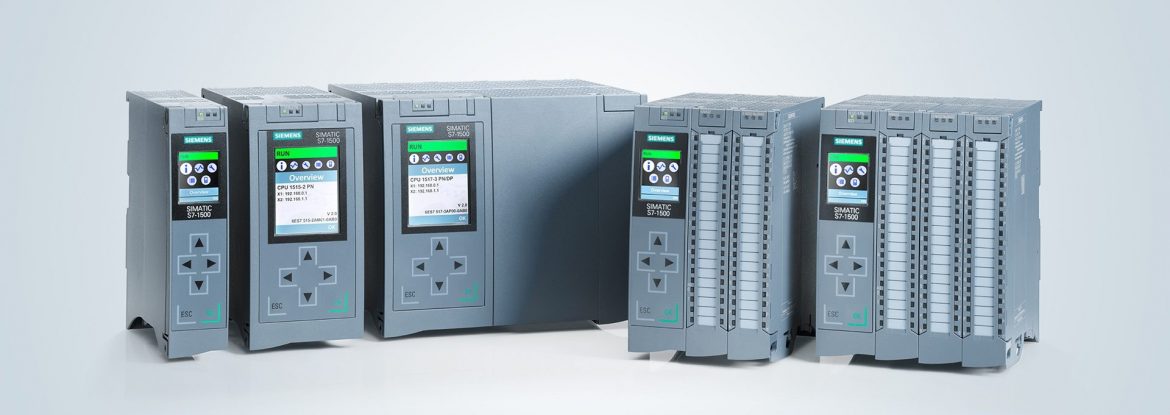
If you're familiar with industrial automation, you may have heard of PLCs. So, what are PLCs and why are they so important in the world of automation?
PLCs are industrial computers used to control different electro-mechanical processes for use in manufacturing, plants, or other automation environments.
PLCs vary in size and form factors. Some are small enough to fit in your pocket while others are large enough to require their own heavy-duty racks to mount. Some PLCs can be customized with backplanes and functional modules to fit different types of industrial applications.
PLCs are widely used in a variety of industries because they’re fast, easy to operate and are considered easy to program. PLCs can be programmed in several ways, from ladder logic, which is based on electromechanical relays, to specially adapted programming languages of BASIC and C, to name a few.
Most PLCs today use one of the following 5 programming languages: Ladder Diagram, Structured Text, Function Block Diagram, Instruction List, or Sequential Function Charts.
SCADA and HMI systems enable users to view data from the manufacturing floor and provide an interface for users to provide control input — and PLCs are an essential hardware component element in these systems.
PLC’s act as the physical interfaces between devices on the plant or manufacturing floor and a SCADA or HMI system. PLCs communicate, monitor and control automated processes like assembly lines, machine functions, or robotic devices.
Given the variety of available PLCs, industrial engineers have to go through a process of evaluating different devices towards selecting the best one for their tasks. To this end, they must review the requirements of their system and of the application where the PLC will be used. Likewise, information and requirements about the I/O capacity of the PLC must be collected, while the type of targeted outputs must be clarified. For instance, the electrical requirements of I/O modules must be documented, including input device voltage, output device voltage, and current. It is also important to identify whether the PLC should support special operations and advanced functions beyond simple discrete (On/off) logic.
Another important aspect for the selection of a PLC relates to the memory and CPU (Central Processing Unit) of the PLC device. To determine CPU requirements, it is important to understand the speed of the industrial process or machine to be controlled. This involves identifying the fastest action needed, as well as the time criticality and the response time of the various operations. It is also necessary to factor in the communication requirements in the PLC selection process. Specifically, data sharing needs must be identified, along with the devices (e.g., computer, touch screen in a workstation) that must communicate with the PLC. In this way, any required communication devices (e.g., modems, cables) can be identified as well.
The PLC selection process must also factor in the need for interacting with the operator via some interfaces like push buttons or LED (Light Emitting Diode) numeric displays. Specifically, the selected PLC must provide support for displaying the proper messages to the operator, along with any required alarms and notifications. Likewise, the operator should be provided with the means to input data in line with the needs of the application.
The PLC selection process must also consider the physical environment where the automation device will be deployed. This is important for employing devices that have undergone proper ruggedization i.e., devices strong and resistant to shocks as imposed by the target environment at hand.