

DCS contains three major characteristics, as its name implies. The first is the division of diverse control functions into relatively small sets of semiautonomous subsystems that are coupled by a high-speed communication bus. Data acquisition, data display, process control, process monitoring, reporting information, and information storage and retrieval are only a few of these functions.
The second feature of DCS is its ability to automate production processes via the use of sophisticated control techniques. The third attribute is how things are organized as a system. The whole control structure is organized as a single automation system, with multiple subsystems united by a correct command structure and information flow.
- Working & Operations of DCS System
Sensors detect process data and transfer it to local I/O modules, which are also coupled to actuators in order to regulate process parameters. The information or data from these remote modules is collected and sent via field bus to the process control unit. The detected data is instantly sent to the process control unit via field bus if smart field devices are employed.
- HMI or Operating Station
This is where plant parameters are operated, monitored, and controlled. It can be a PC or any other monitoring equipment with a separate software program that allows the operator to observe process parameter values and conduct control actions accordingly.
- DCS Process Control Unit
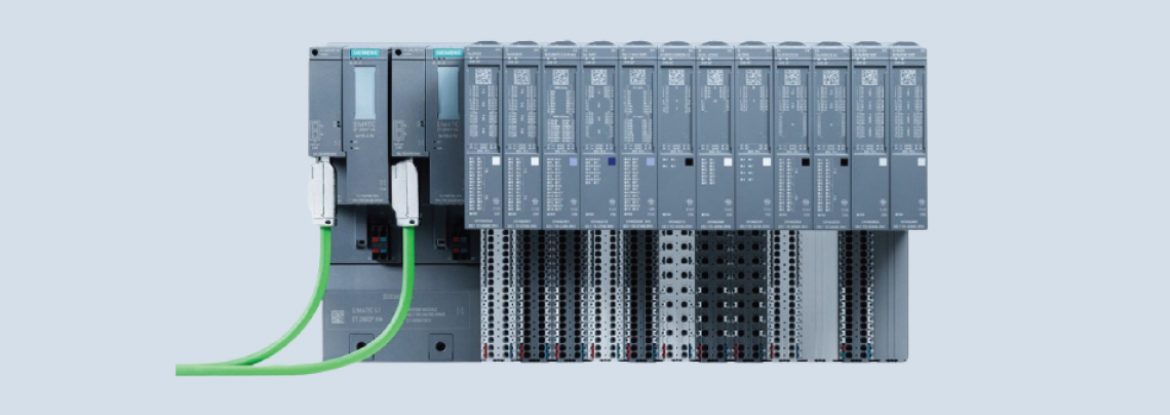
It's also known as a process station, distribution controller, or local control unit. A distributed control system can be made up of one or more process stations that can be supplemented with various I/O devices. A powerful CPU module, a field bus or communication module with enhanced field bus capacity, and either direct or remote linked I/Os make up these controllers.
- Smart or Intelligent Devices
Field bus technology and intelligent field devices are advanced elements of DCS technology that replace standard I/O subsystems (I/O modules). The intelligence necessary for basic sensing and control approaches is embedded in the principal sensing and actuating components of these smart devices. As a result, it eliminates the requirement for a DCS controller for normal sensing and control.