

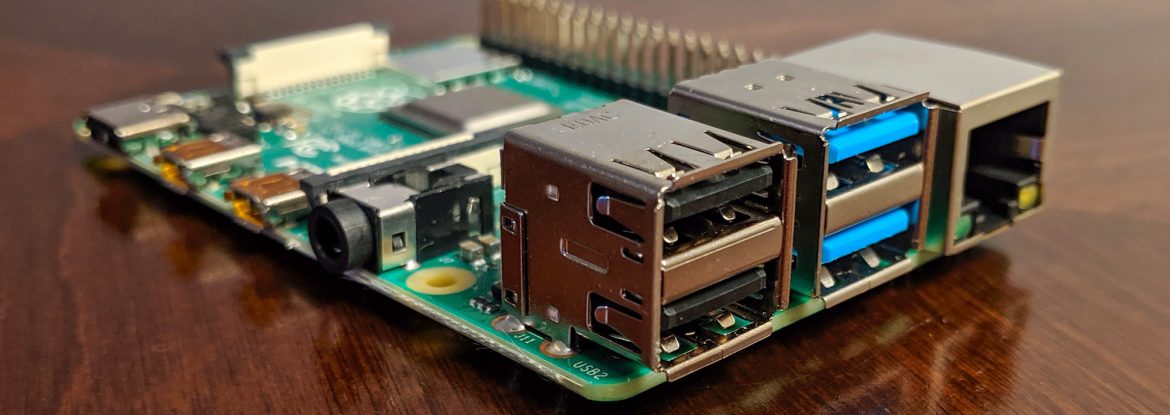
Raspberry Pi technology has been used in tens of thousands of applications in a number of sectors throughout the world because it is both robust and inexpensive.
With a wide range of computing products and a network of trusted design partners, Raspberry Pi not only has the technology to help your business, but it can also provide the vital help you need to find your perfect setup.
Raspberry Pi products are subject to rigorous compliance testing, designed to save you time and money. Raspberry Pi has computing solutions to fit a wide range of applications. From micro-controllers to ARM-based computers, Raspberry Pi brings every last drop of power to bear in your application. Good for your overheads, and good for the environment too.
The Raspberry Pi runs Linux (a number of versions), and its main supported operating system, Pi OS, is open source and runs a suite of open-source software. The Raspberry Pi Foundation contributes to the Linux kernel and other open-source projects, as well as publishing open source versions of many of its own software.
The schematics for the Raspberry Pi are frequently given as documentation, but the board is not open hardware. The Raspberry Pi is widely utilized for its project capabilities among engineers and makers alike.
The Raspberry Pi is widely utilized for its project capabilities among engineers and makers alike. It has been used to create everything from robots to remote monitoring devices since its release back in 2012. Not long after, industry managers took note of the tiny board's capabilities and adapted them for use in manufacturing and automation operations, with some using the famous board to build specialized equipment to make those applications more efficient and cost-effective.
On its own, the Raspberry Pi can be used as an attractive alternative to PLCs (Programmable Logic Controllers), which are prominent in many industries, including manufacturing, automation, and IIoT platforms. Being cost-effective and efficient at carrying out programmed tasks via a simple GPIO interface, allowed the Raspberry to break open the doors to those industries and be used for general operations. The board's use in an industrial setting was so widespread that the Foundation designed a dedicated board based on the Pi for the sole purpose of being implemented into industrial operations. Thus the Raspberry Pi Compute Module was born.